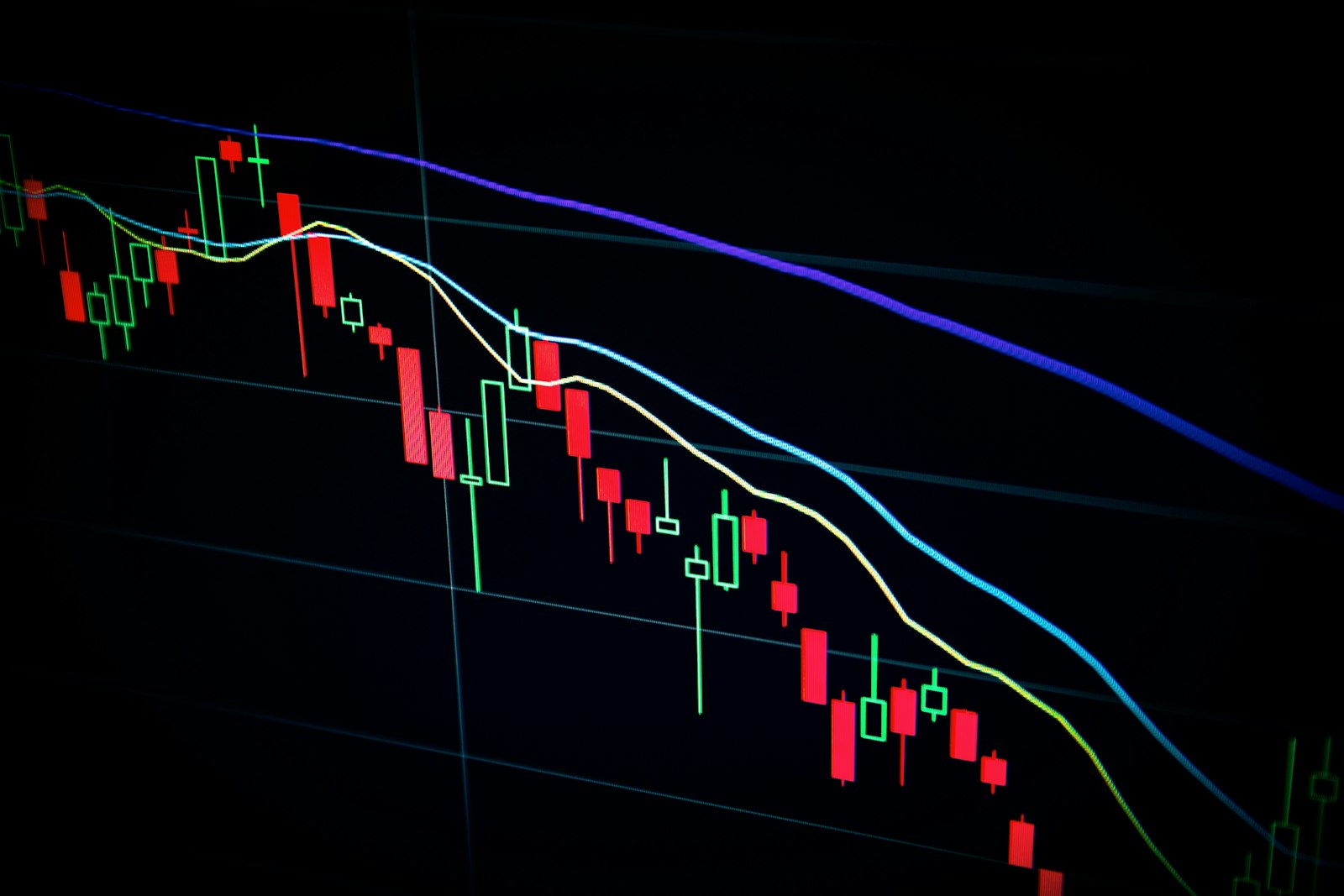
Global financial equity markets throughout 2026 have displayed notable resilience, supported by solid corporate earnings growth and robust capital investment trends driven primarily by the business and industrial sectors. Unlike previous years where consumer spending and services formed the core engine of economic expansion, business capital expenditures have taken center stage. However, this growth remains unevenly distributed across international regions and highly concentrated among a select group of mega-cap corporations tied heavily to the artificial intelligence innovation cycle, high-performance semiconductors, and digital platform infrastructure. This high market concentration leaves broader equity indices sensitive to sector-specific corrections and macro-level policy shifts.
The signal behind the headline
Simultaneously, global financial markets continue to navigate persistent inflation pressures and shifting central bank monetary policies. Fluctuations in key commodity pricing, particularly energy sectors such as oil and natural gas, have kept headline inflation metrics volatile across major developed economies. Central banks, including the U.S. Federal Reserve and the European Central Bank, have maintained cautious stances, keeping interest rates elevated to curb lingering price spikes. These elevated interest rates have introduced significant volatility into global bond markets, pushing government bond yields—such as 10-year U.S. Treasuries—to multi-year highs. Fixed-income investors face a complex balancing act as sovereign debt levels remain elevated across developed nations, compelling governments to pay higher borrowing costs. The important point is not a single number or a single quarterly movement. It is the relationship between the variables. When investment, policy, technology and public expectations move together, their combined effect can be much larger than any one indicator suggests. That is why this subject deserves to be read as a system rather than as an isolated trend.
For decision-makers, the evidence points to a period of transition. Established assumptions still matter, but they are less reliable when supply chains are being redesigned, capital is repriced, and institutions are adapting to new risks. The result is a wider range of possible outcomes. Strong headline performance can coexist with fragility underneath, while a difficult short-term adjustment can create the conditions for more resilient long-term growth.
What the data tells us
Looking forward, market strategists emphasize that while corporate balance sheets remain strong, investors must remain vigilant regarding geopolitical tensions, supply chain fragmentation, and potential inflationary shocks that could disrupt global asset returns. Portfolio diversification, rigorous fundamental analysis, and monitoring capital expenditure cycles will be crucial for institutional and retail investors seeking to navigate the structural regime changes defining the global financial landscape in late 2026. This is also a measurement challenge. International datasets are assembled using different definitions, reporting calendars and levels of transparency. Comparisons therefore need to distinguish between a genuine change in underlying conditions and a change in how a condition is counted. FactPulse treats official releases, research publications and industry evidence as complementary rather than interchangeable.
Three questions are especially useful when reading this field. First, who benefits from the trend and who carries the cost? Second, which part of the result is cyclical and which part reflects a durable structural shift? Third, what would have to be true for the current direction to reverse? Asking these questions prevents a dramatic forecast from being mistaken for a base case.
Why it matters beyond Global Equity Markets and Macroeconomic Resilience
The consequences reach beyond the immediate sector. Companies may change investment plans, households may face new prices or access constraints, and governments may need to balance resilience with affordability. The distribution of gains is as important as the aggregate result. A market can expand while smaller participants lose bargaining power; a new technology can improve productivity while increasing energy use; and an environmental solution can create new demands for minerals, land or infrastructure.
This is where policy design becomes decisive. Durable progress usually depends on clear rules, credible measurement and enough flexibility for local conditions. Poorly targeted support can preserve inefficient systems, while abrupt restrictions can shift activity rather than reduce its impact. The most robust approaches combine transparent goals with regular review, independent evaluation and room for innovation.
What to watch next
Readers should watch four kinds of evidence over the next reporting cycle: capacity and investment data, changes in household or business behaviour, the implementation of new rules, and indicators of stress in the underlying system. Leading indicators can change before the main headline measure does. For example, orders, funding, inventories, hiring and infrastructure connections may reveal a turning point before output or adoption statistics confirm it.
It is equally important to monitor regional divergence. A global average can conceal sharply different experiences across countries, income groups and industries. The practical question is not whether the world is moving in one direction, but at what speed, with which constraints and under whose control. That lens produces a more useful picture for planners, investors, researchers and citizens.
Bottom line
Global financial equity markets throughout 2026 have displayed notable resilience, supported by solid corporate earnings growth and robust capital investment trends driven primarily by the business and industrial sectors. Unlike previous years where consumer spending and services formed the core engine of economic expansion, business capital expenditures have taken center stage. However, this growth remains unevenly distributed across international regions and highly concentrated among a select group of mega-cap corporations tied heavily to the artificial intelligence innovation cycle, high-performance semiconductors, and digital platform infrastructure. This high market concentration leaves broader equity indices sensitive to sector-specific corrections and macro-level policy shifts. Simultaneously, global financial markets continue to navigate persistent inflation pressures and shifting central bank monetary policies. Fluctuations in key commodity pricing, particularly energy sectors such as oil and natural gas, have kept headline inflation metrics volatile across major developed economies. Central banks, including the U.S. Federal Reserve and the European Central Bank, have maintained cautious stances, keeping interest rates elevated to curb lingering price spikes. These elevated interest rates have introduced significant volatility into global bond markets, pushing government bond yields—such as 10-year U.S. Treasuries—to multi-year highs. Fixed-income investors face a complex balancing act as sovereign debt levels remain elevated across developed nations, compelling governments to pay higher borrowing costs. Looking forward, market strategists emphasize that while corporate balance sheets remain strong, investors must remain vigilant regarding geopolitical tensions, supply chain fragmentation, and potential inflationary shocks that could disrupt global asset returns. Portfolio diversification, rigorous fundamental analysis, and monitoring capital expenditure cycles will be crucial for institutional and retail investors seeking to navigate the structural regime changes defining the global financial landscape in late 2026. The balanced conclusion is that the opportunity is real, but so are the trade-offs. Progress will depend on whether institutions can convert new capacity into broad access, and whether measurement keeps pace with a rapidly changing reality. This article is an editorial analysis, not investment, medical, legal or policy advice. Readers should consult the primary source and the latest release before making consequential decisions.