LAWYERSNEW.COMGlobal facts · data · rankings · analysisNovember 05, 2026
FACTPULSEGLOBAL FACTS & DATA
THE WORLD IN NUMBERS
Independent reporting for curious minds
Long reads / systems analysis

Follow the
full system.

Long-form briefings for readers who want to understand the forces beneath the headline.

Global Equity Markets and Macroeconomic Resilience: Navigating Concentration Risks and Evolving Inflation Pressures
Economy
Fact 1 · Global Financial Markets & Macroeconomic Review

Global Equity Markets and Macroeconomic Resilience: Navigating Concentration Risks and Evolving Inflation Pressures

Global financial equity markets throughout 2026 have displayed notable resilience, supported by solid corporate earnings growth and robust capital investment trends driven primarily by the business and industrial sectors. Unlike previous years where consumer spending and services formed the core engine of economic expansion, business capital expenditures have taken center stage. However, this growth remains unevenly distributed across international regions and highly concentrated among a select group of mega-cap corporations tied heavily to the artificial intelligence innovation cycle, high-performance semiconductors, and digital platform infrastructure. This high market concentration leaves broader equity indices sensitive to sector-specific corrections and macro-level policy shifts. Simultaneously, global financial markets continue to navigate persistent inflation pressures and shifting central bank monetary policies. Fluctuations in key commodity pricing, particularly energy sectors such as oil and natural gas, have kept headline inflation metrics volatile across major developed economies. Central banks, including the U.S. Federal Reserve and the European Central Bank, have maintained cautious stances, keeping interest rates elevated to curb lingering price spikes. These elevated interest rates have introduced significant volatility into global bond markets, pushing government bond yields—such as 10-year U.S. Treasuries—to multi-year highs. Fixed-income investors face a complex balancing act as sovereign debt levels remain elevated across developed nations, compelling governments to pay higher borrowing costs. Looking forward, market strategists emphasize that while corporate balance sheets remain strong, investors must remain vigilant regarding geopolitical tensions, supply chain fragmentation, and potential inflationary shocks that could disrupt global asset returns. Portfolio diversification, rigorous fundamental analysis, and monitoring capital expenditure cycles will be crucial for institutional and retail investors seeking to navigate the structural regime changes defining the global financial landscape in late 2026.

Read full report →


Global Economic Growth and Sovereign Debt Trends: Insights from the Latest International Monetary Fund Outlook
Economy
Fact 2 · International Monetary Fund & Global Economy Journal

Global Economic Growth and Sovereign Debt Trends: Insights from the Latest International Monetary Fund Outlook

The global economy in late 2026 exhibits a complex pattern of moderate expansion coupled with structural vulnerabilities, according to the latest macroeconomic reports from the International Monetary Fund (IMF) and the Organisation for Economic Co-operation and Development (OECD). Global Gross Domestic Product (GDP) growth is projected to moderate to approximately 3.1 percent, reflecting tighter financial conditions, lingering geopolitical trade frictions, and fiscal consolidation measures implemented by major governments. While catastrophic recessionary forecasts have largely been avoided, growth remains sluggish compared to pre-pandemic historical averages, underscoring an uneven global recovery. Inflation dynamics continue to vary significantly across geographic regions. While headline inflation has shown signs of gradual moderation in North America, energy market volatility and imported resource costs have kept price pressures elevated across parts of Europe. Conversely, major emerging economies like China experience unique pricing dynamics characterized by soft domestic consumption, property sector adjustments, and low core consumer price inflation. Concurrently, global labor markets display gradual stabilization, with unemployment rates settling into stable bands even as nominal wage growth cools relative to the aggressive spikes seen in prior years. A critical focal point for global economists is the rapid accumulation of sovereign debt. Following years of pandemic-era stimulus and subsequent high interest rate environments, national debt-to-GDP ratios have reached historical highs across both advanced and developing nations. Governments face the difficult task of servicing expensive national debt while funding structural transitions such as green energy adoption and digital infrastructure. Policymakers are under mounting pressure to enact structural fiscal reforms that enhance productivity, foster international trade cooperation, and safeguard long-term economic stability without stifling fragile growth momentum.

Read full report →
International Relations and Global Trade Dynamics: Supply Chain Realignment and Economic Diplomacy
Economy
Fact 4 · Global Affairs & International Relations Journal

International Relations and Global Trade Dynamics: Supply Chain Realignment and Economic Diplomacy

The geopolitical landscape of late 2026 is characterized by continuous strategic realignments, complex economic diplomacy, and the restructuring of critical global supply chains. Nations and multinational corporations are actively prioritizing supply chain resilience over pure cost-efficiency, accelerating trends such as near-shoring, friend-shoring, and industrial self-reliance. This structural transformation affects key sectors including semiconductors, critical minerals, automotive manufacturing, and green energy technology, altering traditional international trade routes and bilateral agreements. Multilateral institutions and global economic forums emphasize the growing importance of cooperative frameworks to address shared transnational challenges, including international debt restructuring for developing nations, cybersecurity standards, and cross-border data governance. Trade policy has become deeply intertwined with national security considerations, leading to targeted tariffs, export controls on dual-use technologies, and strategic subsidies designed to secure domestic manufacturing capacities. These policy shifts introduce both friction and opportunity for global commerce, compelling businesses to adopt agile sourcing strategies and diversified operational footprints. Furthermore, diplomatic efforts are increasingly focused on mitigating the economic impacts of regional conflicts and maritime trade route bottlenecks. Ensuring the unhindered flow of energy commodities, agricultural goods, and manufactured products remains paramount for stabilizing global price levels. As nations navigate this era of fractured globalization, maintaining open channels of economic communication and adhering to rules-based international trade frameworks will be essential for fostering sustainable global prosperity and mitigating systemic geopolitical risks.

Read full report →
Climate Change Statistics and Environmental Science: Tracking Global Temperatures and Ecosystem Shifts
Environment
Fact 6 · Environmental Science & Climate Research Review

Climate Change Statistics and Environmental Science: Tracking Global Temperatures and Ecosystem Shifts

Environmental science reports and climate monitoring agencies continue to document critical climatic shifts across the globe, emphasizing the urgent need for coordinated ecological action and data-driven sustainability strategies. Continuous scientific measurement confirms that global average temperatures continue to hover near record highs, driven by accumulated greenhouse gas emissions. These thermal anomalies manifest in increased frequencies of extreme weather events, including prolonged droughts, intense precipitation patterns, and marine heatwaves that disrupt delicate aquatic ecosystems. In response to these environmental challenges, global scientific communities and meteorological institutions leverage advanced satellite observation networks, oceanic sensor arrays, and climate modeling supercomputers to track ecological changes with unprecedented accuracy. Data from these monitoring systems guide international climate accords and corporate net-zero transition targets. The global transition toward renewable energy generation—led by massive expansions in solar photovoltaic capacity, wind turbine installations, and grid-scale battery storage—has accelerated significantly, supported by falling technology costs and supportive public policies. Beyond energy transition, scientific research increasingly focuses on ecosystem restoration, biodiversity preservation, and carbon dioxide removal technologies. Protecting critical natural carbon sinks, such as tropical rainforests, peatlands, and oceanic kelp forests, forms a vital pillar of global mitigation strategies. By relying on rigorous empirical data provided by international scientific bodies, policymakers and corporate leaders can implement targeted interventions that balance ecological preservation with sustainable economic growth.

Read full report →
Global Urbanization and Megacity Growth: Infrastructure Challenges, Housing Markets, and Smart City Innovations
Economy
Fact 13 · Urbanization Studies & Smart Cities Research Journal

Global Urbanization and Megacity Growth: Infrastructure Challenges, Housing Markets, and Smart City Innovations

The ongoing demographic shift toward urban living represents one of the most powerful structural transformations of modern society. More than half of the world's population currently resides in urban areas, with projections indicating that global megacities will continue expanding rapidly, particularly across developing regions in Asia and Africa. This massive urban migration generates unprecedented demand for sustainable infrastructure, affordable housing, efficient public transportation, clean water access, and intelligent municipal governance systems. Rapid urbanization exerts intense pressure on urban real estate markets and cost-of-living metrics, leading to affordability crises in major financial and technological hubs worldwide. City planners and municipal governments respond by investing heavily in 'Smart City' technologies—utilizing Internet of Things (IoT) sensor networks, AI-optimized traffic management systems, smart grid energy distribution, and automated waste collection to enhance urban efficiency and reduce environmental footprints. Public transit investments, including high-speed rail networks and electric bus fleets, are prioritized to curb carbon emissions and alleviate chronic traffic congestion. Furthermore, urban resilience planning has taken center stage in response to climate change risks, such as extreme heatwaves, urban flooding, and rising sea levels. Coastal megacities implement sophisticated flood defense infrastructure and green building codes to protect urban populations and economic assets. This comprehensive analysis explores global urbanization statistics, smart city technological innovations, housing affordability trends, and sustainable municipal infrastructure development.

Read full report →
Global Semiconductor Supply Chains: Foundational Foundry Capacities, Geopolitical Risks, and Advanced Packaging
Technology
Fact 17 · Global Semiconductor Industry Association & Foundry Review

Global Semiconductor Supply Chains: Foundational Foundry Capacities, Geopolitical Risks, and Advanced Packaging

The global semiconductor industry remains the absolute technological and economic backbone of modern civilization, powering everything from consumer smartphones and automotive electronic control units to hyperscale data centers and artificial intelligence supercomputing clusters. The manufacturing lifecycle of advanced microprocessors is characterized by extreme geographic concentration and specialized interdependencies. While foundational research and electronic design automation (EDA) software are primarily concentrated in the United States, physical manufacturing is heavily reliant on advanced foundries located in East Asia, particularly Taiwan and South Korea, with packaging and testing facilities distributed globally. Throughout 2026, industry analysts and trade organizations have closely monitored capital expenditure cycles and fab capacity expansions across major economies. Governments in the U.S., Europe, and Japan have injected hundreds of billions of dollars in public subsidies through domestic legislation to incentivize local semiconductor manufacturing, aiming to secure sovereign supply chains against potential geopolitical disruptions. However, building and commissioning advanced fabrication plants (fabs) is an intricate, multi-year engineering challenge requiring specialized talent, extreme ultraviolet (EUV) lithography equipment, and reliable supplies of ultra-pure water and electrical power. Furthermore, as monolithic silicon scaling approaches physical limits governed by quantum tunneling and thermal dissipation, the semiconductor industry has shifted its focus toward advanced packaging and heterogenous chiplet architectures. Packaging innovations—such as 2.5D silicon interposers and 3D vertical die stacking combined with High-Bandwidth Memory (HBM)—enable modular microprocessors to communicate at near-monolithic speeds while bypassing traditional yield constraints. This comprehensive report examines global foundry market share statistics, capital investment trends, supply chain vulnerability indices, and technological advancements in microchip packaging.

Read full report →
Global Renewable Energy Transition: Solar Photovoltaics, Grid-Scale Storage, and Nuclear Power Renaissance
Environment
Fact 18 · International Renewable Energy Agency & Clean Tech Review

Global Renewable Energy Transition: Solar Photovoltaics, Grid-Scale Storage, and Nuclear Power Renaissance

The global transition toward clean energy generation and sustainable power distribution has accelerated significantly, driven by falling technology costs, ambitious national net-zero commitments, and soaring electricity demand from artificial intelligence data centers and industrial electrification. Solar photovoltaic (PV) installations and wind turbine deployment continue to shatter previous annual records, supported by massive manufacturing scale and continuous efficiency improvements in photovoltaic cell chemistry and turbine aerodynamics. Renewable energy sources now represent the cheapest form of new electricity generation across the vast majority of the world's major economies. However, the massive integration of intermittent renewable energy sources introduces complex grid stability and energy storage challenges. Power grids require reliable baseload generation and rapid-response balancing mechanisms to prevent blackouts when solar and wind output fluctuates due to weather conditions. Consequently, investments in grid-scale lithium-ion battery energy storage systems (BESS), pumped hydro storage, and smart grid transmission infrastructure have surged globally. Simultaneously, the energy industry is experiencing a notable nuclear power renaissance, with governments and private enterprises investing in advanced small modular reactors (SMRs) and life extensions for existing nuclear plants to provide carbon-free baseload electricity. International energy agencies emphasize that while renewable capacity additions are impressive, accelerating grid interconnection queues and securing critical mineral supplies—such as lithium, cobalt, nickel, and rare earth elements—remain critical bottlenecks. Strategic international cooperation and mining diversification are essential for sustaining the clean energy transition. This comprehensive analysis reviews global renewable energy statistics, battery storage market trends, nuclear power developments, and grid modernization strategies.

Read full report →
Global Water Resources and Hydrological Stress: Desalination Technologies, Urban Water Security, and Efficiency Science
Environment
Fact 27 · World Water Resources Institute & Global Hydrology Journal

Global Water Resources and Hydrological Stress: Desalination Technologies, Urban Water Security, and Efficiency Science

Water scarcity and hydrological stress represent some of the most urgent natural resource challenges facing global society in the twenty-first century. Driven by population growth, rapid urbanization, industrial consumption, and shifting precipitation patterns linked to global climate change, major geographic regions worldwide experience chronic water deficits. According to international environmental assessments, over two billion people reside in countries experiencing high water stress, threatening agricultural yields, municipal drinking water supplies, industrial manufacturing output, and regional geopolitical stability. In response to mounting hydrological pressures, coastal nations and arid municipalities are expanding investments in advanced seawater desalination and industrial wastewater reclamation infrastructure. Modern reverse osmosis (RO) desalination plants leverage high-efficiency energy recovery devices, advanced polyamide thin-film composite membranes, and renewable energy integration to reduce electrical power consumption per cubic meter of purified water produced. Concurrently, urban water utilities deploy Internet of Things (IoT) acoustic leak detection sensors and smart water meters to identify structural pipe bursts rapidly, minimizing non-revenue water losses across aging municipal distribution networks. Agricultural water management—which accounts for approximately seventy percent of global freshwater withdrawals—is also undergoing comprehensive modernization. Farmers increasingly adopt precision drip irrigation systems, sub-surface moisture monitoring, and drought-tolerant crop varieties to maximize crop yield per drop of water used. Protecting natural freshwater aquifers, restoring degraded wetland ecosystems, and establishing transparent water rights trading markets form essential pillars of sustainable water governance. This report reviews global water scarcity statistics, desalination technological advancements, urban water security metrics, and agricultural conservation strategies.

Read full report →
Global Metals and Mining Economics: Critical Mineral Demands, Copper Shortages, and Sustainable Extraction
Economy
Fact 30 · Global Mining Economics & Critical Minerals Review

Global Metals and Mining Economics: Critical Mineral Demands, Copper Shortages, and Sustainable Extraction

The global metals and mining industry stands at the center of the global industrial and energy transition, tasked with supplying the unprecedented quantities of raw materials required to build electric vehicles, solar farms, wind turbines, electrical transmission grids, and AI data center infrastructure. Critical metals—including copper, lithium, nickel, cobalt, manganese, and rare earth elements—possess unique physical and conductive properties essential for modern high-tech components. Consequently, long-term supply projections highlight potential structural deficits in foundational metals like copper, where global demand threatens to outpace primary mine supply over the coming decades. Developing new primary mining operations is an intensely capital-intensive, multi-decade process requiring extensive geological exploration, environmental impact assessments, permitting approvals, and local community consultations. Mining corporations face mounting challenges, including declining ore grades at legacy open-pit mines, elevated energy costs, and stricter regulatory standards governing tailings dam safety and water usage. To overcome these constraints, the industry invests heavily in advanced mineral processing technologies, automated autonomous haulage trucks, underground robotic drills, and bio-leaching methods that extract high-purity metals from low-grade ore deposits. Furthermore, sustainability and environmental, social, and governance (ESG) compliance have become central to capital allocation decisions in mining finance. International regulatory frameworks mandate transparent supply chain traceability to ensure critical minerals are sourced responsibly without violating environmental standards or human rights. Concurrently, recycling initiatives and circular economy models for urban mining—recovering valuable precious and critical metals from spent electronics and recycled batteries—are expanding rapidly to complement primary mine supply. This comprehensive report reviews global metal price benchmarks, mineral supply-demand forecasts, mining technology innovations, and sustainable extraction practices.

Read full report →
Global Sovereign Wealth Fund Allocation Shifts: Private Credit, Infrastructure, and Sustainable Energy Markets
Economy
Fact 43 · Global Sovereign Wealth & Institutional Investment Review

Global Sovereign Wealth Fund Allocation Shifts: Private Credit, Infrastructure, and Sustainable Energy Markets

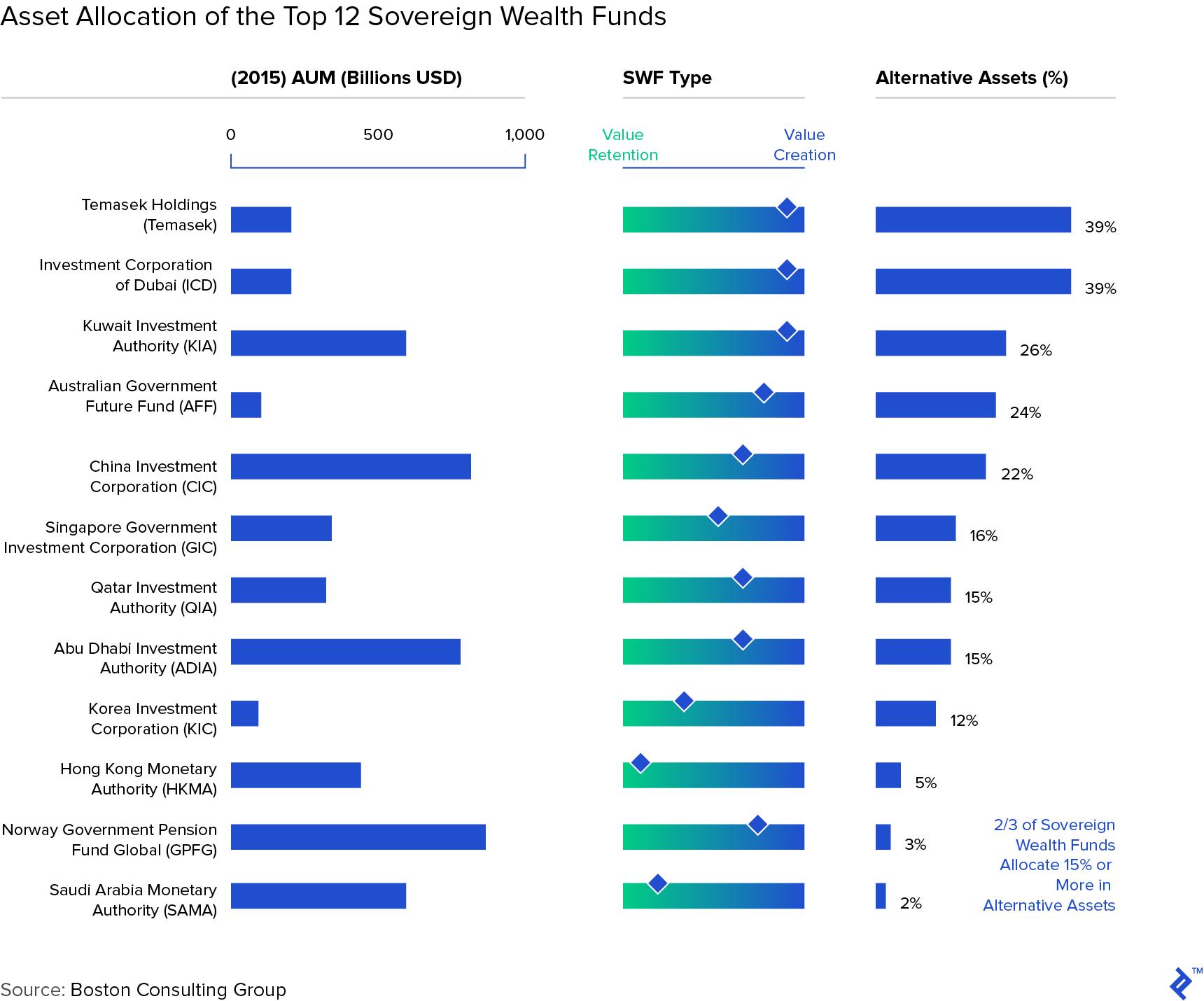
Sovereign Wealth Funds (SWFs) managing trillions of dollars in global capital have significantly recalibrated their long-term asset allocation strategies in late 2026. Historically reliant on traditional public equity indices and benchmark government bonds, major state-owned investment vehicles across the Middle East, Asia-Pacific, and Northern Europe are shifting capital toward private credit, critical infrastructure projects, and renewable energy transitions. This strategic pivot reflects a broader push to insulate national reserves against public market volatility while securing predictable, inflation-hedged yields amidst shifting macroeconomic regimes. Private credit and direct infrastructure lending have emerged as premier growth vectors for sovereign investors. As traditional commercial banking institutions face tighter regulatory capital requirements and maintain conservative lending criteria, sovereign wealth funds step in to provide large-scale private debt financing for corporate acquisitions, telecommunications towers, port expansions, and industrial facilities. Furthermore, sovereign funds are taking direct equity stakes in global energy transition projects—such as utility-scale battery storage facilities, green hydrogen production plants, and electrical transmission corridors—aligning long-term financial returns with national sustainability mandates. Additionally, sovereign investors are increasingly acting as cornerstone anchor tenants in global venture capital and private equity deals within deep-tech domains, including semiconductor foundries, artificial intelligence compute clusters, and aerospace technology. Institutional analysts monitor sovereign fund deployment patterns closely, as their strategic capital allocations serve as strong indicators of long-term economic priorities and cross-border investment trends. This comprehensive report evaluates sovereign wealth fund portfolio compositions, regional deployment trends, private asset valuations, and state-backed investment strategies.

Read full report →
Global Nuclear Energy Expansion: Small Modular Reactors, Fuel Supply Chains, and Grid Integration
Environment
Fact 45 · World Nuclear Association & Advanced Energy Review

Global Nuclear Energy Expansion: Small Modular Reactors, Fuel Supply Chains, and Grid Integration

Nuclear power generation is experiencing an unprecedented global resurgence, driven by escalating baseload electricity demands from hyperscale data centers, industrial electrification initiatives, and stringent national carbon-reduction mandates. Governments and major technology enterprises are recognizing that variable renewable energy sources, such as wind and solar, require continuous, zero-emission baseload power support to maintain electrical grid stability. Consequently, long-term energy strategies worldwide are re-incorporating nuclear power as a primary foundational asset. A major technological catalyst driving this nuclear renaissance is the development and commercialization of Small Modular Reactors (SMRs) and Generation IV reactor architectures. Unlike traditional multi-gigawatt nuclear power plants that require massive capital outlays, complex site civil engineering, and decade-long construction timelines, SMRs are prefabricated in standardized factory environments and transported to sites via rail or barge. Their modular footprint, passive passive safety mechanisms, and scalable deployment capabilities make them ideal for co-location near industrial manufacturing hubs, remote mining sites, and major AI compute facilities. However, scaling global nuclear capacity requires resolving significant fuel supply chain bottlenecks and nuclear waste management protocols. The global enrichment market for High-Assay Low-Enriched Uranium (HALEU)—required by many advanced SMR designs—is expanding rapidly, prompting Western nations to invest heavily in domestic fuel enrichment infrastructure and regulatory streamlining. This technical economic report details global nuclear output statistics, SMR commercialization roadmaps, uranium market supply dynamics, and grid integration strategies.

Read full report →
Global Public Health Epidemiology: Wastewater Disease Surveillance, AI Diagnostics, and Pandemic Preparedness
Environment
Fact 50 · Global Health Security & Public Health Epidemiology Journal

Global Public Health Epidemiology: Wastewater Disease Surveillance, AI Diagnostics, and Pandemic Preparedness

Global public health surveillance systems have undergone a profound technological upgrade, utilizing real-time molecular diagnostics, environmental sampling networks, and artificial intelligence forecasting models to detect and monitor epidemiological threats before they manifest in clinical hospital admissions. Building upon lessons learned from past global health crises, international public health agencies and disease control centers have established standardized, non-invasive surveillance networks capable of tracking pathogen mutations globally. A foundational pillar of modern epidemiological surveillance is municipal wastewater genomics. By regularly sampling and sequencing viral and bacterial RNA/DNA retrieved from urban wastewater treatment plants, epidemiologists can detect local disease outbreaks days before symptomatic patients seek medical care or undergo clinical testing. This community-level biological data provides unbiased, cost-effective spatial mapping of disease prevalence across major metropolitan populations. Concurrently, artificial intelligence algorithms analyze massive global datasets—comprising anonymized health records, climate anomalies, migratory bird patterns, and global flight travel volumes—to predict high-risk vector transmission zones and model potential outbreak trajectories. Furthermore, international health organizations continue to refine global biosecurity protocols and digital vaccine trial registries to ensure rapid response capabilities. This comprehensive report details global epidemiological tracking metrics, wastewater sequencing technology applications, and international public health infrastructure standards.

Read full report →